Tauchplanung für iOS und Android
Ein vollwertiger Deko-Planer für die Hosentasche, mit einem kostenlosen Toolkit drumherum.
Elf kostenlose Werkzeuge für Gasplanung, Mischen, Tarierung und den Rest des Tauchtags, plus ein kostenpflichtiger Deko-Planer für offenen Kreislauf und CCR.
Kostenloser Download. Kein Konto. Funktioniert offline.
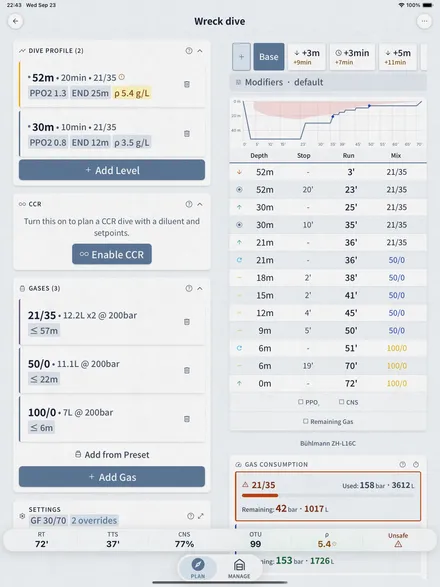
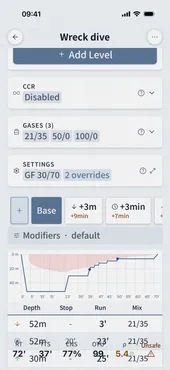
Genutzt von über 590 Tauchern in über 72 Ländern. September 2026
In der Presse
Richtig eingesetzt ist sie ein wirklich nützliches Stück digitaler Ausrüstung – besonders für Tec-, Trimix- und CCR-Taucher.
Dive Kit ist eine sehr gut umgesetzte App und ein nützlicher Allround-Werkzeugkasten für Taucher.
Was in der App steckt
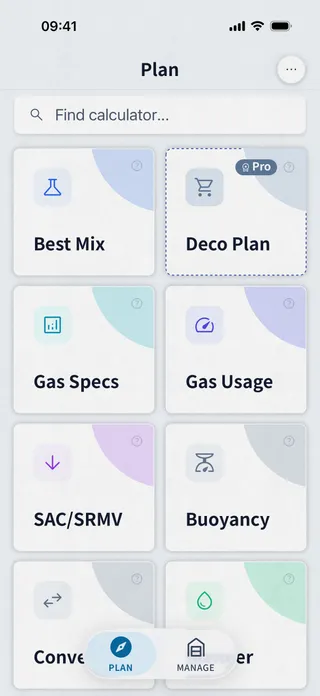
Elf kostenlose Werkzeuge und der Deko-Planer.
Jede Berechnung läuft auf dem Handy, ohne Konto und ohne Signal. Jedes Werkzeug hat seine eigene Seite.
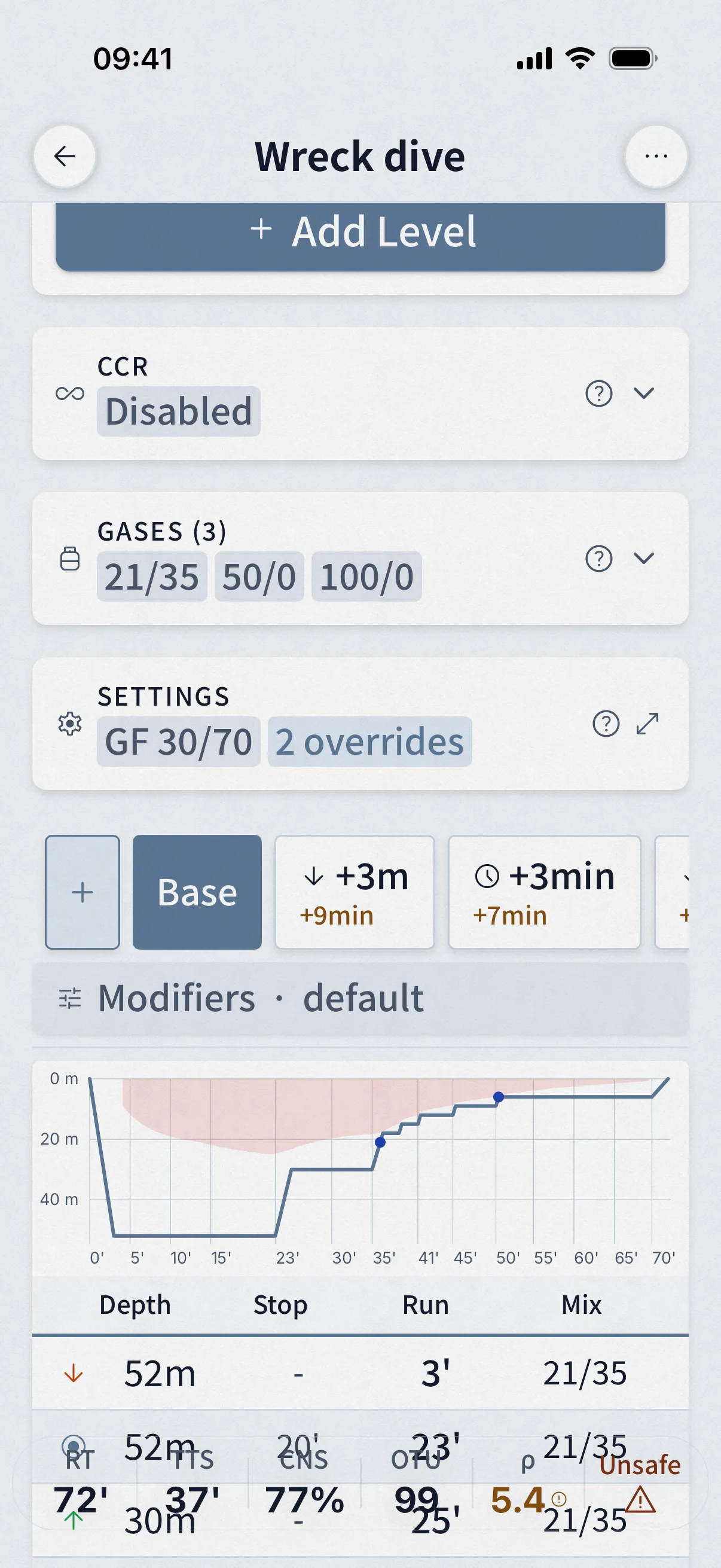
- Deko-Planer Kostenpflichtig Mehrstufige OC- und CCR-Pläne mit Notfallszenarien
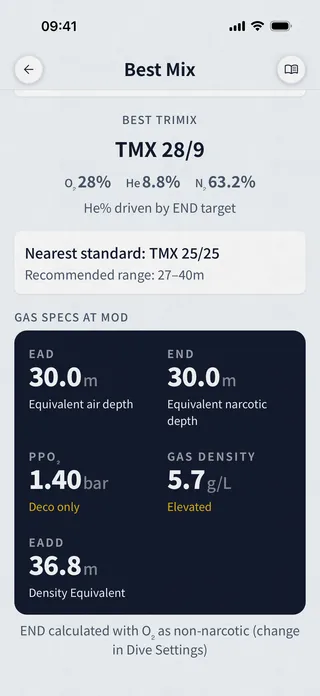
- Best-Mix-Rechner Bestes Nitrox oder Trimix für eine Zieltiefe
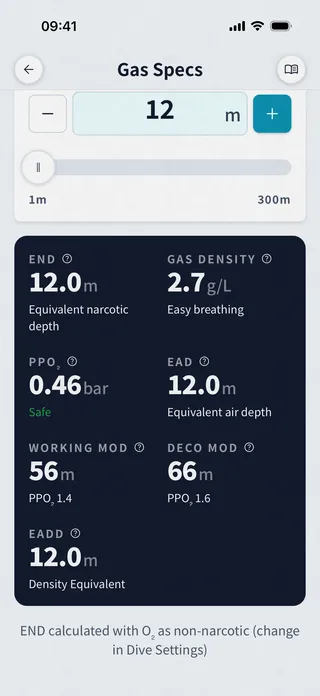
- Gas-Spezifikationen MOD, EAD, END und Dichte für jedes Gemisch
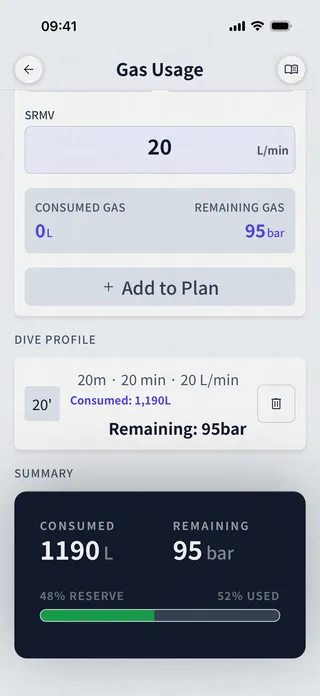
- Gasverbrauch Wie viel Gas der Tauchgang braucht, pro Abschnitt
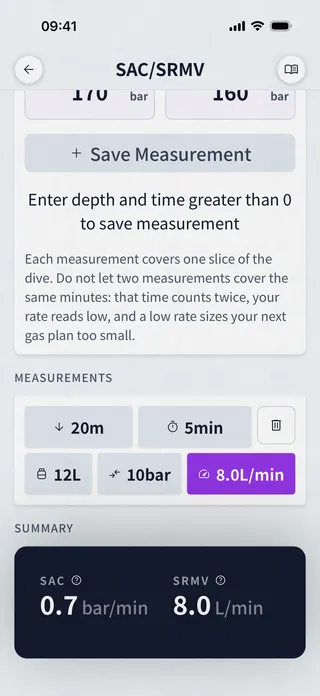
- AMV/SAC-Rechner Dein Atemminutenvolumen aus einem echten Tauchgang
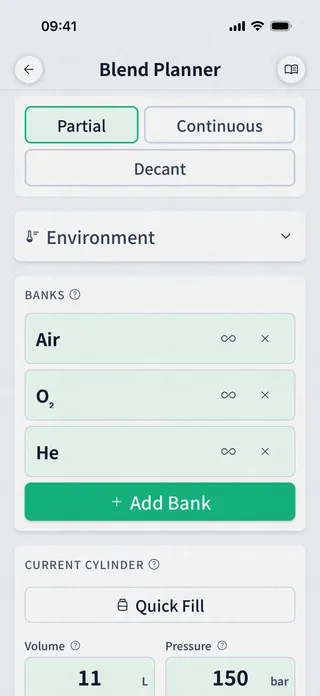
- Gas-Blender Füllpläne für Partialdruck- und Durchflussmischen
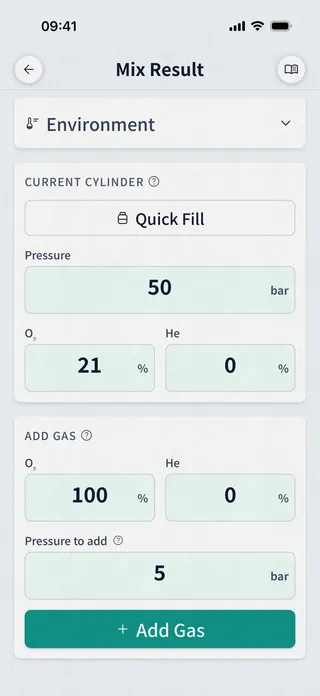
- Mix Calculator Das Gemisch nach dem Auffüllen
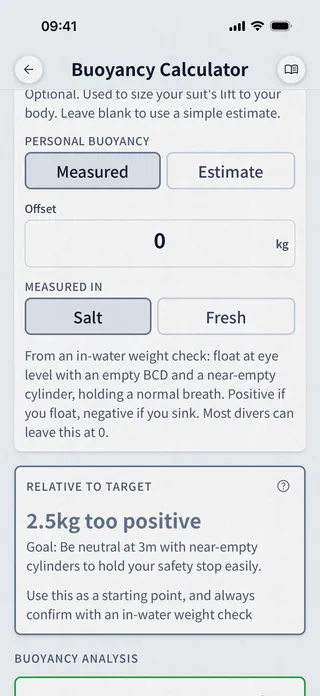
- Tarierungsrechner Bleikonfigurationen vergleichen, bevor du ins Wasser gehst
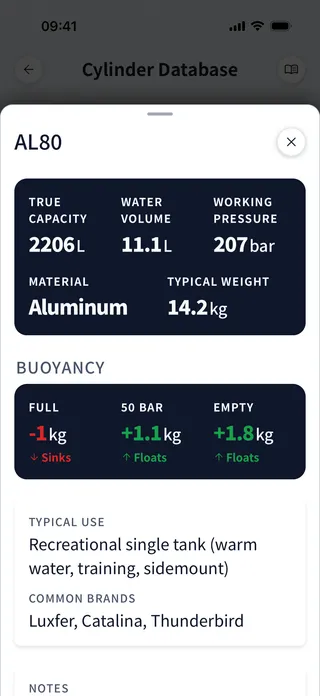
- Cylinders Daten und Auftrieb gängiger Flaschen
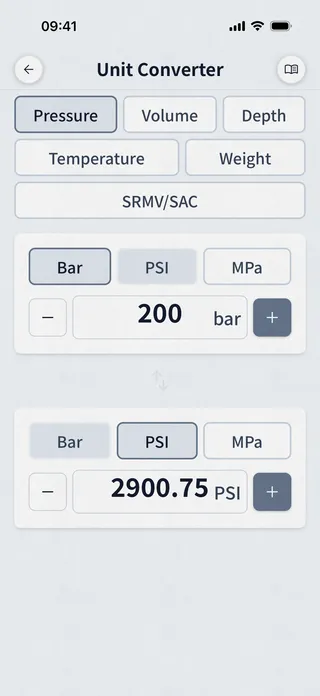
- Einheitenrechner Druck, Tiefe, Volumen, metrisch und imperial
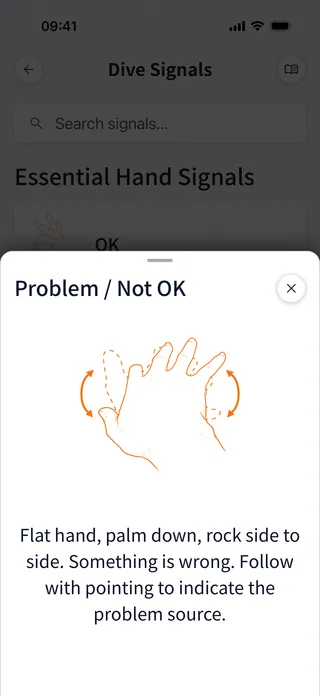
- Tauchzeichen Tauchzeichen zum Nachschlagen
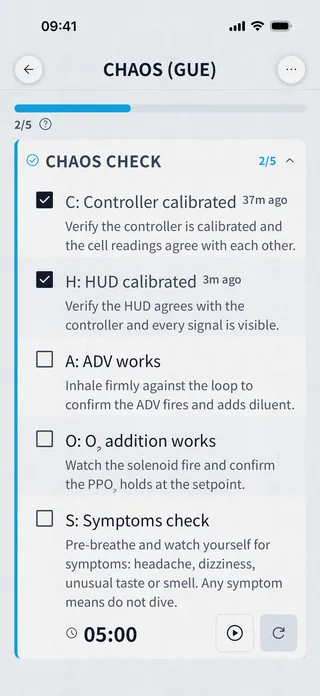
- Checklists Vortauch- und Rebreather-Checklisten mit Timern
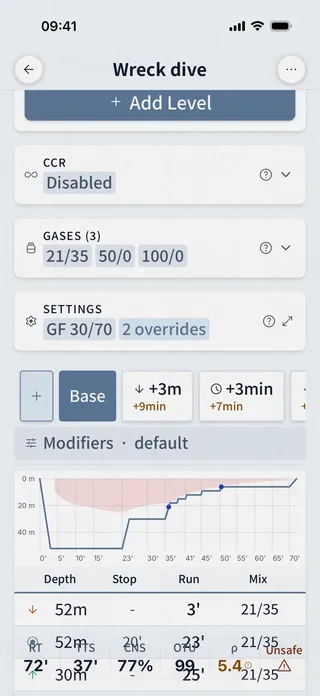
Der Deko-Planer
Was dir das eine kostenpflichtige Feature bringt.
- Mehrstufige Pläne mit mehreren Gasen und automatischen Notfallszenarien
- CCR: Setpoint-Zeitpläne, Diluent-Wechsel und ein Bailout-Plan ab jedem Punkt des Tauchgangs
- Sauerstoff-Luftpausen eingeplant, CNS und OTU bei jedem Schritt verfolgt
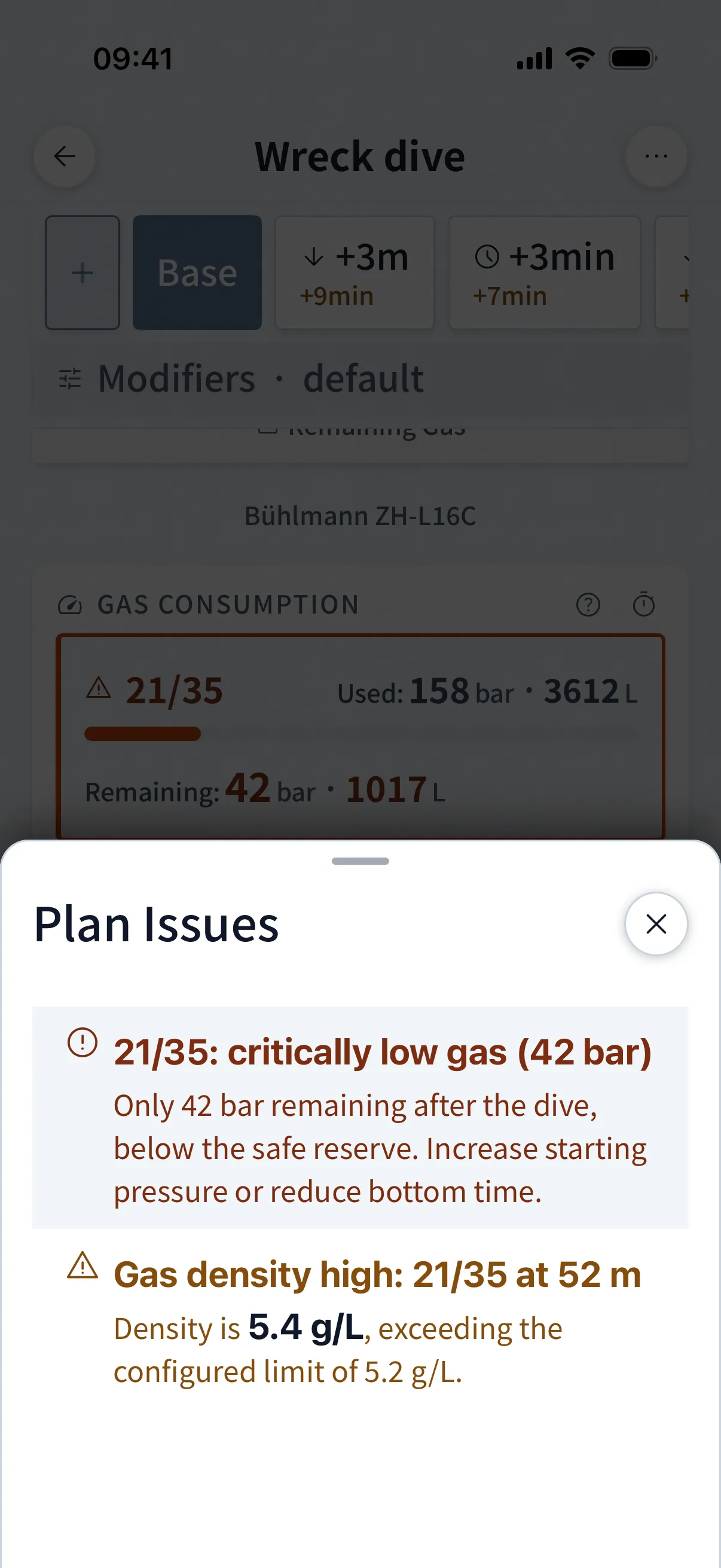
- Ein Planprobleme-Blatt zeigt, was die Physik ausschließt, Gasdichte inklusive
- Plan als Link oder QR-Code teilen; Lesen ist kostenlos, in der App oder im Browser
- Algorithmus
- Bühlmann ZH-L16C
- Konservativität
- Gradient factors
- Modi
- OC + CCR
- Gase
- Multi-gas
- Notfallszenarien
- Automatic + custom
- Rechenschritt
- 1 second
Kostenlose Testphase, dann 4,99 $/Monat oder einmalig 24,99 $ für immer. Preise werden in der Währung deines Stores angezeigt.
Alles, was der Planer kann →Validierung
Mit MultiDeco gegengeprüft, und die Daten sind veröffentlicht.
Wir haben dieselben 33 Tauchgänge mit denselben Aufstiegsraten durch Dive Kit und MultiDeco laufen lassen: Luft, Nitrox und Trimix, offener Kreislauf und CCR, Salz- und Süßwasser, Meereshöhe und Höhe.
- Deko-Beginn
- 26 von 33 auf einen Schritt
- Gaswechsel
- Gleiche Tiefen in beiden
- CNS · OTU
- Je nach Methode verschieden, größte CNS-Abweichung 54 Punkte (W4)
Jedes Szenario ist mit seinen Eingaben, beiden Plänen und einer Notiz zu jeder Abweichung veröffentlicht. Lade den Plan über seinen Share-Link in die App und berechne ihn selbst nach.
Die 33 Szenarien durchsehen →* MultiDeco ist die Referenz, weil es etabliert und weit verbreitet ist, nicht weil es die Wahrheit ist. Übereinstimmung beweist nicht, dass ein Plan sicher ist.
| Tiefe | MultiDeco | Dive Kit | Δ | Gemisch |
|---|---|---|---|---|
| 27 m | 0'01" | — | — | 35/25 |
| 24 m | 1'39" | 1'17" | −22s | 35/25 |
| 21 m | 1'47" | 0'57" | −50s | 50 |
| 18 m | 2'17" | 2'05" | −12s | 50 |
| 15 m | 3'41" | 3'37" | −4s | 50 |
| 12 m | 4'56" | 5'08" | +12s | 50 |
| 9 m | 8'03" | 7'58" | −5s | 50 |
| 6 m | 10'09" | 9'46" | −23s | 100 |
| 3 m | 19'04" | 18'48" | −16s | 100 |
Für wen sie ist
Was jede Art von Taucher bekommt.
Sporttaucher
- Best Mix für Nitrox-Füllungen
- Gasverbrauch und SAC/RMV für den geplanten Tauchgang
- Tarierung und Flaschendaten für neue Ausrüstung
- Checklisten vor jedem Tauchgang
Technisch, offener Kreislauf
- Mehrstufige Trimix-Pläne mit Gradientenfaktoren
- Automatische Notfallszenarien, tiefer und länger
- Warnungen zu Gasdichte, END und Hypoxie
- Pläne per Link oder QR-Code mit dem Team teilen
Rebreather
- Setpoint-Zeitpläne mit Wechseln während des Tauchgangs
- Diluent-Wechsel mit eingerechnetem Spülgas
- Ein Bailout-Plan ab jedem Punkt des Tauchgangs
- Der Worst-Case-Ausfallpunkt wird für dich berechnet
Vom Entwickler
Wer Dive Kit baut, und woran du mich messen kannst.
Öffentlich diskutiert
- r/diving: Modern deco planner alternative to MultiDeco ↗
- ScubaBoard: Dive Kit, developer here, feedback wanted ↗
- ScubaBoard: Current state of deco planning apps ↗
Funktion vorschlagen
Wünsche und Fehlermeldungen sind auf dem Feedback-Board öffentlich. Jeder kann abstimmen, und diese Stimmen entscheiden, was als Nächstes gebaut wird. Das meiste der letzten Version kam von dort.
Auf dem Feedback-Board posten ↗Dive Kit holen
Elf Tools kostenlos. Deko-Planer: kostenlose Testphase, dann 4,99 $/Monat oder 24,99 $ Lifetime.
FAQ
Fragen, die Taucher wirklich stellen
What algorithm does the Deco Planner run, exactly?
Bühlmann ZH-L16C with gradient factors: 16 tissue compartments, helium and nitrogen tracked separately at their published half-times, tissues recomputed in 1-second steps through descent, bottom, and ascent. The engine is written in C++ from the published papers. The full implementation is documented in the guide, including the non-obvious design choices and why we made them. Read how the engine works.
Does it match MultiDeco?
We ran the same 33 dives through both planners at the same ascent rates and published everything: inputs, outputs, and a written note on every difference. The depth where decompression begins agrees within about one deco step on nearly every scenario, and the gas switches land at the same depths on 27 of the 33. The oxygen clocks are counted differently: Dive Kit's CNS reads the same as MultiDeco's or higher on 31 of the 33, because it uses the more cautious ambient-pressure method. Browse the side-by-side comparison.
Will it match my Shearwater?
It runs the same model family with the same gradient factor controls, so schedules line up when the settings match, but any two implementations differ in small ways. Plan in Dive Kit, dive your computer. If you find a disagreement you can't explain, email me the plan link and I'll look into it: [email protected].
Why pay when Subsurface and other free planners exist?
Fair question. You are paying for a mobile-first planner with CCR setpoint schedules, bailout plans, automatic contingencies, oxygen air breaks, and shareable plans, maintained full time. If a free desktop tool covers your needs, use it. The other eleven tools in Dive Kit are free regardless.
Can I try the Deco Planner before paying?
Yes. The monthly plan starts with a free trial; cancel before it converts and you pay nothing. There is also a $24.99 lifetime purchase with no subscription at all. Prices show in your store's currency.
What happens to my plans if I stop paying?
Shared plans stay readable. Anyone can open a shared plan in the app or in a browser and read the full schedule without a subscription; only creating and editing plans is paid. How plan sharing works.
Will the developer abandon this?
I can't promise the future, but I can show the past: the changelog lists everything shipped, dated, and the engine changelog goes down to individual fixes. The other half of the answer: decompression math doesn't expire. Bühlmann's papers are decades old, a gas law won't deprecate, and an app that needed constant updates to stay useful would have been built wrong. I'll keep shipping what divers need and folding in new research as it's published. If updates one day slow to maintenance and research, that means the toolkit is finished, not abandoned, and that I'm busy building the next thing on the roadmap, like the cave planner.
Is it a dive computer?
No. It has no depth sensor and tracks nothing underwater. Dive Kit is a planning tool you use on the surface. Always dive a real dive computer.
Does it work offline?
Everything runs on the phone: no account, no connection, no tracking. It is built for boats without signal. The only things that need internet are downloading the app and opening shared plan links in a browser.
What doesn't it do?
No dive log yet, no VPM (it runs dissolved-gas Bühlmann, so a VPM-only planner will not produce a matching schedule), and no dive computer sync. The model also assumes things about you that may not be true on the day. Read the assumptions before you trust any plan.
How deep does the CCR support go?
Setpoint schedules with mid-ascent switches, diluent switches (dilout) with flush gas accounting, stay-on-loop deco, full bailout schedules, and bailout-at-depth views. The published cross-reference includes CCR scenarios you can open and rerun yourself. How CCR planning works.
What does it cost, in plain terms?
Eleven tools: free forever, no ads, no account. The Deco Planner: free trial, then $4.99/month, or $24.99 once. Download Dive Kit and the free tools are yours either way.